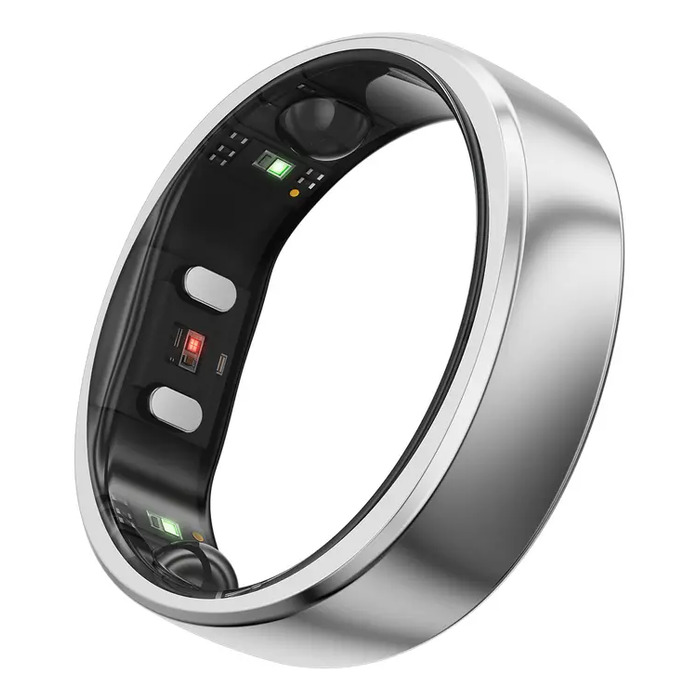
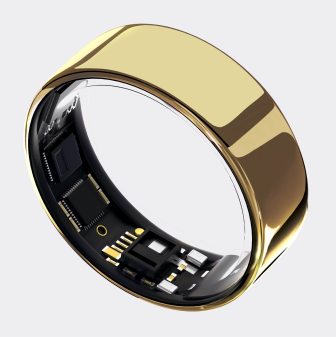
RingConn Gen 2 vs Ultrahuman Ring Air: Which Smart Ring Should You Buy?
Smart rings are the fastest-growing wearable in the Baltics, and two subscription-free models dominate the market. Here is which one deserves your finger.
Smart rings promise the same health tracking as a wrist wearable — sleep stages, heart rate, recovery — without a screen on your wrist or a nightly charging ritual. Two models lead the subscription-free market that has reached Baltic shops: the RingConn Gen 2 and the Ultrahuman Ring Air. Neither locks features behind a mandatory membership, but they take very different paths to get there.
Design and comfort
Both rings are titanium and light enough to forget you are wearing them. The RingConn Gen 2 is the thinner of the two at 2.0 mm and weighs around 2 g, while the Ring Air sits at 2.4 mm and 2.4–3.6 g depending on size. RingConn runs a tighter fit, so ordering the sizing kit first matters; Ultrahuman offers a broader size range that suits more fingers out of the box. Both survive swimming and showers.
Battery and charging
This is the clearest split. The RingConn Gen 2 lasts 10–12 days on a charge, and its pocket-sized charging case holds enough extra power to keep the ring topped up for roughly 150 days between wall charges — you can travel for weeks without a cable. The Ring Air claims up to six days but realistically delivers three-and-a-half to four-and-a-half with all sensors active, and it charges on a small dock, not a case. If you hate charging, RingConn wins outright.
Health tracking
Here Ultrahuman fights back. Its app is the more polished of the two, presenting recovery, movement and metabolic insight clearly, and it ties into Ultrahuman's wider glucose-tracking ecosystem. The RingConn Gen 2 counters with a genuine headline feature: clinically validated sleep apnea detection, which flags overnight breathing interruptions with over 90% accuracy — something the Ring Air does not offer. Both cover sleep stages, heart rate, HRV, blood oxygen, skin temperature and stress.
Costs beyond the box
"Subscription-free" needs an asterisk for Ultrahuman. Core metrics are free, but advanced features such as AFib detection and cycle tracking are sold as one-off "PowerPlug" add-ons. RingConn includes everything the ring can do at no extra cost. Over a couple of years that difference adds up.
Price and value
In Baltic shops the RingConn Gen 2 starts around €220–300, while the Ultrahuman Ring Air sits higher at roughly €340 and up. So RingConn is both cheaper up front and cheaper to live with. Note that Ultrahuman is tangled in a patent dispute with Oura that has restricted supply in some markets — worth checking stock before you commit.
Verdict
For most buyers the RingConn Gen 2 is the smarter choice: it is thinner, lasts far longer between charges, throws in a charging case, detects sleep apnea and costs less with no paywalled extras. The Ultrahuman Ring Air earns its place if you value a slicker app and Ultrahuman's recovery and metabolic ecosystem, and you do not mind charging twice a week or paying for add-ons. See how both stack up against other smart rings and watches before deciding.